

Earth VC backs Callosum to build heterogeneous AI infrastructure
Earth Venture Capital backs Callosum, the London-based AI infrastructure company, in its $100 million seed round. The company is building the intelligent systems layer for heterogeneous AI.
The round is led by Atomico, with significant participation from Plural, DCVC and the UK Sovereign AI Fund, alongside other global investors and angels. It comes less than six months after Callosum emerged from stealth with a $10.25 million pre-seed, reflecting growing conviction that the economics of AI computing will be restructured by Callosum.
Earth VC’s investment in Callosum reflects a broader thesis: as AI becomes more capable and embedded across the economy, the next major breakthrough will not come from making models bigger alone. It will come from rethinking how intelligence is matched to the compute underneath it.

The Problem: One Chip Cannot Fit Every Task
As applied AI scales across the economy, workloads are becoming more complex, varied and demanding. Yet much of today’s AI infrastructure still follows a homogeneous model: every workload, whether a simple classification call or a multi-step reasoning chain, is dispatched to the same general-purpose GPU cluster. This approach rests on a simple assumption: bigger models running on more of the same chips will continue to deliver greater capability.
The deeper issue is that most real-world AI problems are inherently heterogeneous. They require different, complementary forms of intelligence rather than one dominant model. The industry, in other words, has been building homogeneous systems to solve heterogeneous problems.
The next era of AI will not be won by scale alone. Frontier models offer extraordinary capabilities, but the cost of scaling them continues to rise. At the infrastructure level, a one-chip-fits-all approach also creates structural dependencies for AI developers, enterprises and nation states. The challenge is no longer simply how much compute is available, but how intelligently that compute is used.
Callosum: Building the Intelligent Systems Layer for Heterogeneous AI Infrastructure
London-based Callosum builds systems-level software for the heterogeneous AI era, operating at the level of systems, not models.
Its orchestration platform decomposes AI workloads and distributes each task to the model and processor best suited to execute it. The result is inference tailored to the task, unlocking gains in cost, speed and capability that no single model or chip can reach alone. AI developers can run multiple models across a wide range of chips and extract performance benefits from different architectures, each optimized for the task at hand, producing outcomes greater than the sum of the parts.
Callosum's Tailored Inference product delivers intelligence optimized to the task, through a family of APIs running over heterogeneous compute. Already deployed across fields ranging from advanced cybersecurity to finance, Tailored Inference is producing step-changes in performance and cost efficiency.
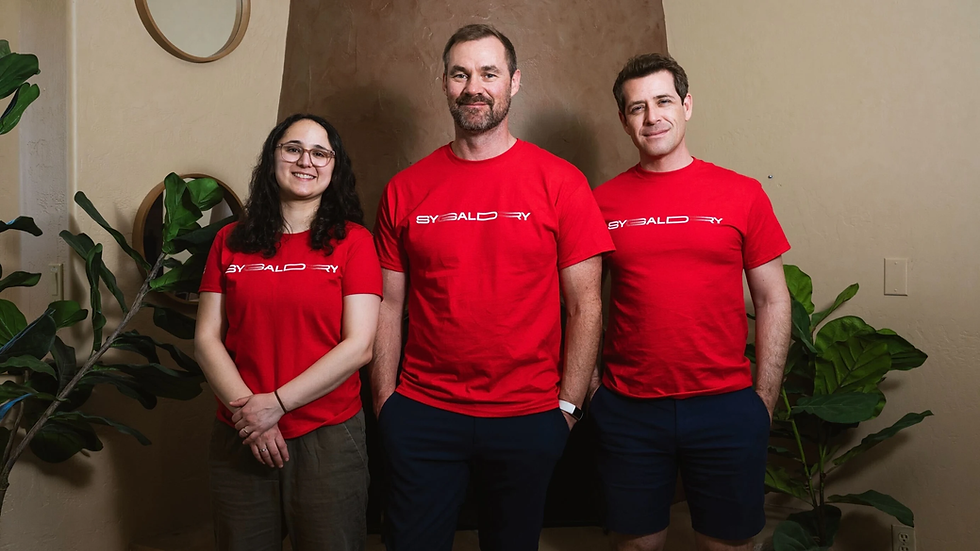
Callosum was founded in 2025 by Danyal Akarca and Jascha Achterberg, who met while earning their PhDs at Cambridge across neuroscience, computing, and AI. Their research examined how the brain reaches intelligence, not by replicating one type of neuron billions of times but by combining specialized circuits. They argue AI systems will follow the same pattern: many models, interacting collectively, on diverse computing substrates. Both have published in Nature journals and held positions at Intel and Google DeepMind.
Why Earth VC Invests in Callosum
In 2026, Gartner projects that global spending on inference ($23.3 billion) will surpass that of training ($19 billion), out of a $42 billion market for AI-optimized infrastructure that has nearly doubled in a year. That crossover changes what the architecture underneath has to optimise for. Training is bounded, it ends when the run ends. Inference begins at deployment and scales with every user and every query.
The physical bill arrives at the same time. The IEA projects data centre electricity consumption will roughly double to around 945 TWh by 2030, with demand from AI-focused facilities tripling over the same period. Consumption by accelerated servers, the hardware AI actually runs on, is growing at 30% a year. Inference, by most estimates, already accounts for the large majority of AI compute in production.
The shift from training to inference moves the question. It is no longer only which model is best, but how efficiently intelligence gets delivered across a widening range of models and chips. Callosum's answer is to treat compute as multimodal rather than monolithic: many models, many chips, matched to what each task actually needs. The result is a token that is cheaper and more valuable.
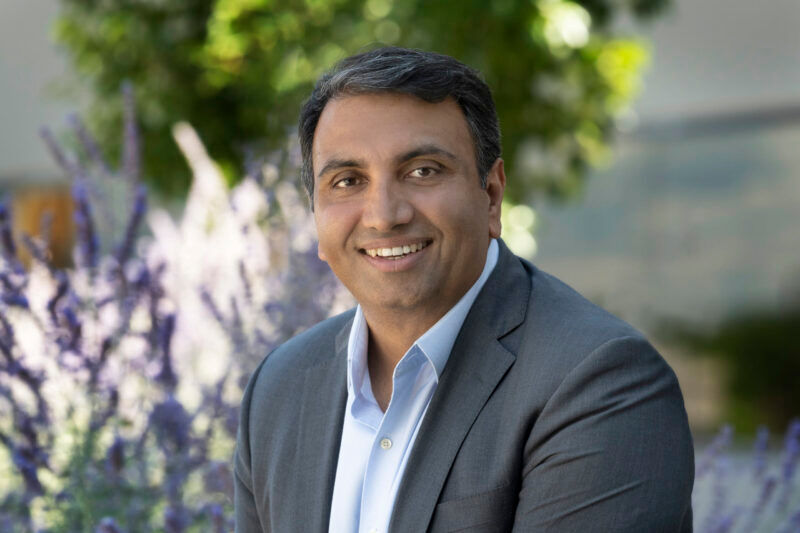
"For a decade, the answer to every AI problem has been the same chip, more of it. The next leap flips that: intelligence optimized for the task, rather than infrastructure dictating how the task must be solved. That’s the heterogeneous AI future Callosum is building." - Duc Pham, Principal at Earth Venture Capital.
The future of AI is heterogeneous, and the infrastructure connecting increasingly specialized models and chips will become a critical layer of the stack.
Looking Ahead: Heterogeneous Compute and the Future of AI Sovereignty
Callosum is the first-ever investment of the UK Sovereign AI Fund, and to be named in the UK's £1.1B AI hardware plan. Heterogeneity is key to moving AI sovereignty from aspiration to reality. Sovereignty does not require a nation to own every layer of the AI stack. It requires the ability to run frontier-level intelligence across the silicon a nation can access, without becoming dependent on a single supplier or architecture.
When workloads can move across models, chips and architectures, access to advanced AI becomes less tied to any one technology ecosystem. Built-to-last AI infrastructure will not be built around one dominant architecture, but around the ability to harness the best intelligence wherever it exists. That is infrastructure built to adapt, and endure.
Comments